

Where AI actually pays off: a practical guide to finding high-value use cases
8 min read
Almost every business now knows it should be using AI. Far fewer know where to start. The result is a lot of pilots that never ship and a lot of budget spent on tools nobody uses. This guide is a practical method for finding the few AI use cases that will actually pay off for your business, and ignoring the rest for now.
Start with problems, not technology
The most common mistake is starting from the technology: a team gets excited about a model and goes looking for somewhere to use it. That is backwards. The use cases that pay off start from an expensive, repetitive, or slow problem you already have. AI is a means to an outcome, not the outcome.
So begin by listing the work in your business that is high volume, rule heavy, text or data heavy, or a bottleneck people complain about. Customer support triage, processing inbound documents, drafting first versions of content, searching scattered knowledge, forecasting demand: these are the kinds of places AI tends to earn its keep.
Score each idea on value and feasibility
Once you have a list, resist the urge to chase the most exciting idea. Score each one on two axes. Business value is how much time, cost, or revenue it moves. Feasibility is how realistic it is given your data, your systems, and the current state of the technology. Plot them.
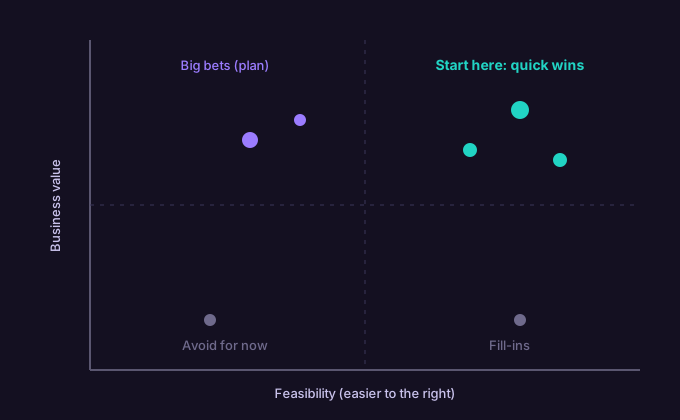
The top right quadrant, high value and high feasibility, is where you start. These are your quick wins: meaningful impact you can ship in weeks, not years. The top left, high value but hard, are big bets worth planning for once you have a win behind you. The bottom half can wait.
Rule of thumb: ship one quick win before you attempt a big bet. An early, visible result builds trust and teaches you about your own data, which is usually the real constraint.
Check the data honestly
Most AI projects do not fail on the model. They fail on the data. Before you commit to a use case, ask: do we have the data this needs, is it accessible, and is it clean enough? If the answer is no, your first project might actually be a small data project. That is fine. Knowing this up front is what separates a plan from a wish.
A simple discovery process
Here is the lightweight process we use with clients to go from a long list of ideas to one funded project.
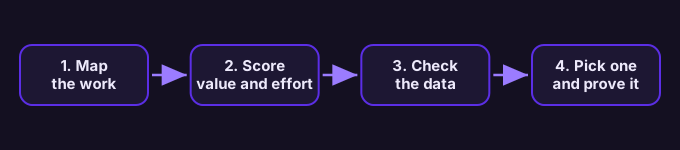
- Map the work. Workshop the repetitive, costly, and slow tasks across teams.
- Score value and effort. Place each idea on the matrix above.
- Check the data. Confirm the top candidates have usable data.
- Pick one and prove it. Build a small, real version on real data and measure the result.
Prove it small, then scale
The goal of the first project is not a finished platform. It is evidence. Build the smallest version that runs on your real data, put it in front of real users, and measure the outcome against a baseline. If it works, you have both a result and the confidence to invest further. If it does not, you have learned cheaply.
Finding where AI pays off is not about predicting the future. It is about being honest about your problems, your data, and what is feasible today, then starting with one win and building from there.